Heating an entire home to the same temperature can be expensive and unnecessary, particularly when only one or two rooms are used for much of the day. But simply turning the heating down is not a safe answer for everyone.
A better approach is to protect the warmth where you spend your time, reduce avoidable heat loss and use the controls already available. Health comes first: a cold home can worsen heart and breathing problems, and some people need warmer conditions than others.
The advice below is most relevant to temperate and colder climates. Heating systems, building standards, financial support and tenancy rules vary by country, so use local official guidance for your home.
Two Minute Read
- Keep occupied rooms comfortably warm rather than allowing the whole home to become cold.
- In temperate and colder climates, 18°C is widely used as a minimum benchmark during cold seasons; some people need a higher temperature.
- Close curtains at dusk, shut internal doors and deal with safe-to-seal draughts.
- Do not block permanent vents, air bricks, extractor systems or other required ventilation.
- Keep radiators and heaters clear of furniture, curtains, laundry and clutter.
- Learn what your thermostat, timer and radiator controls actually do before changing several settings at once.
- Use portable heaters, fires and electric blankets only as instructed, with working smoke and carbon-monoxide alarms where appropriate.
Decide which rooms genuinely need heat
Begin with how the home is actually used.
The living room may need steady warmth during the day, while a spare bedroom may need much less. A bedroom can sometimes be warmed before bedtime rather than throughout the day. Bathrooms and kitchens often need shorter periods of warmth and effective ventilation to manage moisture.
This does not mean letting unused rooms become extremely cold or damp. Very cold surfaces can encourage condensation, and water pipes may need protection from freezing. The suitable minimum depends on the climate, construction, heating system and occupants.
If you cannot heat every room, official UK cold-weather guidance recommends heating the room you use most during the day and warming the bedroom before sleep. Keep doors closed between differently heated spaces so warmth does not continually drift into colder rooms.
Use temperature as a health check, not a competition
The World Health Organization notes that 18°C has been proposed as a safe, balanced minimum indoor temperature for the general population during cold seasons in temperate or colder climates. A higher minimum may be needed for people who are older, less mobile, very young or living with chronic illness, particularly heart or lung disease.
That figure is a health benchmark, not a target everyone must endure. If you remain cold at 18°C, the room may need to be warmer. Draughts, cold walls, dampness, inactivity, clothing and individual health all influence comfort.
A simple room thermometer can reveal whether a space that feels chilly is genuinely cold. Place it away from a radiator, direct sunlight, an exterior door or a particularly cold window, where the reading may not represent the room as a whole.
Seek local medical or public-health advice if you are unsure what temperature is appropriate for a health condition. Do not lower the temperature merely to meet a saving suggested online.
Keep the heat you have already paid for
Small changes can reduce the speed at which a room loses warmth.
Close curtains at dusk
Curtains or well-fitted blinds add a barrier at cold windows. Close them when daylight fades, but make sure they do not cover a radiator or hang against a heater. Open them in daylight when sunshine can warm the room.
Shut internal doors
Closing doors helps keep warmth in occupied rooms, particularly around halls, stairways and seldom-used spaces. Do not wedge fire doors open.
Stop appropriate draughts
Check for gaps around external doors, opening windows, letterboxes and loft hatches. Purpose-made draught strips, door brushes and fabric draught excluders can improve comfort when fitted correctly.
Do not seal permanent vents, air bricks, trickle vents required by the building, chimney ventilation or openings serving fuel-burning appliances. Homes need controlled ventilation for moisture, indoor air quality and combustion safety. If you are unsure why an opening exists, ask a qualified professional before blocking it.
Move furniture away from heat sources
A sofa pressed against a radiator absorbs heat and restricts air movement. Leave clear space around radiators and heaters. Keep curtains, bedding, drying clothes and other combustible materials well away from portable heaters and fires.
Learn the controls before turning everything down
Heating controls vary, but common systems may include:
- a timer or programmer that controls when heating operates;
- a room thermostat that responds to the temperature in a reference room;
- thermostatic radiator valves that adjust individual radiators; and
- separate zones for different parts of the home.
Changing all of them at once makes it difficult to tell what works. Start by checking the manufacturer’s instructions or asking a qualified installer to explain the system.
Set heating around the times rooms are occupied. If the home takes a long time to warm, starting a little earlier may work better than setting a much higher temperature at the last moment.
Do not use a thermostatic radiator valve to control the radiator in the same room as the main thermostat unless the system has been designed that way. The two controls can work against each other. Heating systems such as heat pumps, storage heaters, underfloor heating and electric panel heaters also behave differently from a conventional boiler and radiators.
Warm the person as well as the room
Comfort does not come from air temperature alone.
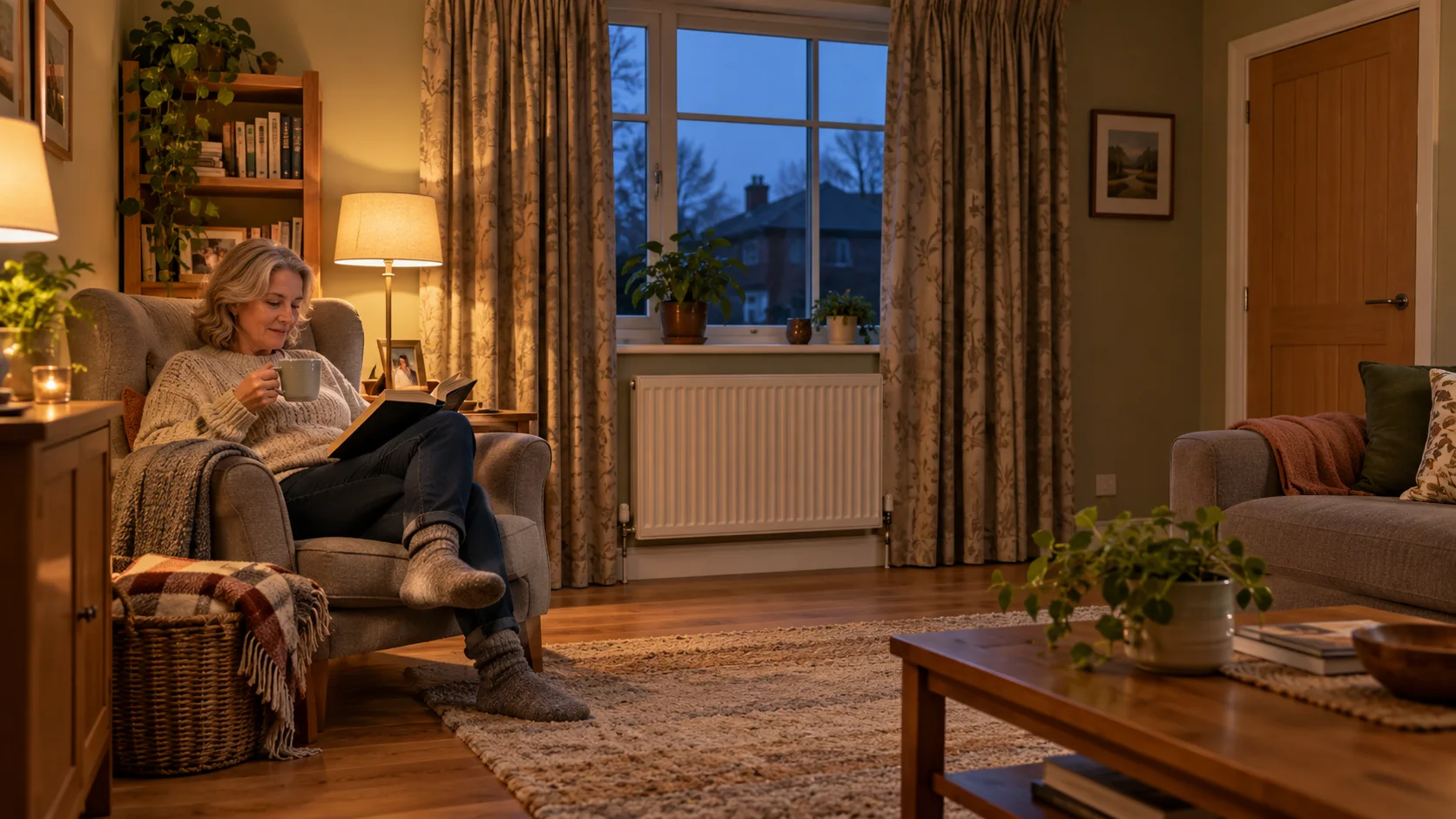
Several light clothing layers usually trap warmth better than one bulky item. Warm socks, suitable slippers and a blanket over the legs can help when sitting still. Regular gentle movement, if it is safe and comfortable for you, can also reduce the chill that develops during long periods of inactivity.
Hot drinks and regular meals may help you feel more comfortable, but they do not make an inadequately heated home safe. Alcohol can create a misleading sensation of warmth and is not a cold-weather strategy.
Use hot-water bottles and electric blankets only according to their instructions. Do not use a hot-water bottle and an electric blanket together. Check electric blankets for damage and replace them according to the manufacturer’s safety guidance.
Keep ventilation without throwing away all the heat
A warm home still needs fresh air and moisture control. Cooking, bathing, drying laundry and breathing all add moisture. Without adequate ventilation, condensation and mould can develop.
Use extractor fans where provided and keep required vents open. In cold weather, opening a window for a short period can refresh a room without leaving it fully open for hours. Government ventilation guidance notes that windows do not need to remain open continuously; even a few minutes can help replace stale air.
If condensation or mould persists, do not assume the answer is simply to open windows more or turn the heating higher. Leaks, inadequate insulation, faulty extraction or building defects may need attention from a landlord, housing provider or qualified professional.
Use portable heating safely
Portable heaters can warm one occupied room, but they introduce fire and electrical risks.
- Place the heater on a stable surface where it cannot be knocked over.
- Keep it well away from curtains, furniture, bedding, clothes and paper.
- Never use it to dry laundry.
- Plug it directly into a suitable wall socket unless the manufacturer explicitly permits otherwise.
- Do not leave it running unattended or while sleeping unless it is specifically designed and approved for that use.
- Follow the manufacturer’s clearance and maintenance instructions.
Fuel-burning appliances require suitable ventilation and professional installation and servicing. Never use an outdoor heater, barbecue, camping stove or generator to heat an enclosed home. Carbon monoxide cannot be seen or smelled and can be fatal.
Fit and test smoke alarms. Use carbon-monoxide alarms where required or recommended for the appliances in your home, following local fire-service and building guidance.
Ask for help before the home becomes dangerously cold
If heating costs are unaffordable, contact an official energy-advice service, local authority, utility provider, housing organisation or recognised charity in your country. Support may include tariff advice, grants, emergency credit, benefits, insulation schemes or help with faulty heating.
Tenants should report broken heating, severe draughts, damp, unsafe appliances and other defects to the landlord or housing provider in writing. Local rules determine the landlord’s responsibilities and the enforcement options available.
During severe cold, community centres, libraries and other designated warm spaces may provide a safe place to spend time. They are not a substitute for repairing an unsafe home, but they can provide immediate warmth and contact with other people.
Seek medical advice if cold conditions are worsening an existing health problem. Confusion, slurred speech, poor coordination, slow breathing and unusual drowsiness can be signs of hypothermia and require urgent help.
Key Takeaways
- Prioritise comfortable, safe warmth in the rooms that are actually occupied.
- Treat 18°C as a general cold-season benchmark, not a maximum or a universal prescription.
- Close curtains and doors, address suitable draughts and keep heat sources unobstructed.
- Never block required ventilation or use outdoor fuel-burning equipment indoors.
- Adjust heating controls according to the system rather than applying one rule to every home.
- Portable heaters and electric bedding require careful positioning, inspection and supervision.
- Ask for financial, housing or technical help before cost pressures create an unsafe home.
👣
One Small Step
Choose the room where you spend most of the day. Check its temperature, move anything blocking the radiator or heater, and identify one safe draught you can address this week.
Sources & Further Reading
Disclaimer
This article provides general information. Heating, ventilation and energy needs vary between homes and occupants. Follow appliance instructions, maintain adequate ventilation and seek qualified advice where safety, damp, electrical work or gas appliances are involved.