Your home may feel completely familiar, but familiarity can make small hazards easy to overlook. A loose rug, dim staircase or frequently used item stored just out of reach may not seem dangerous—until tiredness, poor lighting or a momentary loss of balance turns it into one.
Falls are not an inevitable part of getting older. Many risks can be reduced through practical changes that cost little or nothing, while larger adaptations may provide valuable reassurance when mobility or balance has changed.
The aim is not to make your home look like a hospital. It is to create clear routes, dependable support and better lighting so you can move around with greater confidence and remain independent.
Two Minute Read
- Remove or secure loose rugs, trailing cables and clutter from regular walking routes.
- Improve lighting on stairs, in hallways and between the bedroom and bathroom.
- Fit secure handrails and grab rails where additional support is needed.
- Use non-slip surfaces in bathrooms and clean up spills promptly.
- Keep everyday items within comfortable reach instead of climbing or stretching.
- Wear supportive footwear indoors rather than loose slippers or socks alone.
- Ask for a professional assessment if you have fallen, feel unsteady or are unsure which adaptations would help.
Begin with the routes you use most
You do not need to redesign your entire home at once. Start by walking through the journeys you make repeatedly:
- Bed to bathroom
- Living room to kitchen
- Front door to your usual chair
- Top to bottom of the stairs
- House to garden, driveway or bin
- Chair to telephone, light switch or heating controls
Look at these routes during both daylight and darkness. Something that seems obvious at midday may almost disappear in the evening.
Pay attention to places where you have to step around furniture, change direction abruptly, cross an uneven surface or reach for support. If you regularly steady yourself on a wall, door frame or piece of furniture, that may indicate that the route needs improving.
If possible, ask somebody else to walk around with you. A fresh pair of eyes may notice hazards that have gradually become part of the background.
Clear clutter from the floor
Shoes, shopping bags, pet toys, magazines and laundry can quickly create an obstacle course. Even small objects can cause a trip if they are difficult to see or appear where you do not expect them.
Choose practical storage near the place where clutter tends to accumulate. This could include:
- A shoe rack by the door
- A basket for newspapers or magazines
- Hooks for bags and coats
- A container for pet toys
- A clear place for parcels and shopping
- A bedside holder for books and glasses
Avoid leaving boxes or other belongings on staircases, even temporarily. Keep landings and the area around the top and bottom of the stairs clear.
Furniture should also leave enough space for you to walk naturally without turning sideways or squeezing through gaps. A clear route is generally more useful than keeping an occasional table or decorative object that repeatedly gets in the way.
Deal with loose rugs and uneven flooring
Loose mats and rugs can slide, curl at the edges or catch the front of a shoe or walking aid.
The safest option may be to remove small rugs from frequently used routes. If you want to keep one, make sure it lies completely flat and has an effective non-slip backing suitable for the floor beneath it.
Check fitted carpets for:
- Loose edges
- Raised seams
- Worn patches
- Ripples or stretched areas
- Exposed tacks
- Damage near doorways or stairs
Broken tiles, uneven floorboards and raised thresholds should also be repaired. Marking an uneven area with contrasting tape might make it more visible temporarily, but it is not a permanent substitute for correcting the hazard.
Be cautious when moving between different flooring types. A highly polished floor, thick rug or unexpected step can alter the way your foot meets the surface.
Keep cables out of walking routes
Telephone chargers, extension leads and lamp cables can easily cross the places where you walk.
Whenever possible:
- Move electrical items closer to wall sockets.
- Route cables along walls rather than across floors.
- Use a suitable cable cover where a lead must cross an exposed area.
- Avoid running cables under rugs.
- Unplug and put away chargers when they are not being used.
- Ask a qualified electrician about additional sockets if extension leads have become permanent fixtures.
Do not rely on ordinary adhesive tape as a long-term solution. It can come loose, leave a sticky edge or create another uneven surface.
Improve lighting throughout the home
Good lighting helps you see steps, obstacles, changes in floor level and anything that has been left in your path.
Check that:
- Hallways and staircases are evenly illuminated.
- Light switches are easy to reach at both ends of a staircase.
- Bulbs are bright enough for the space.
- Lamps do not create strong glare or deep shadows.
- Curtains or furniture are not blocking useful daylight.
- Outdoor paths, entrances and steps are visible after dark.
- Spare bulbs are available so failed lights can be replaced promptly.
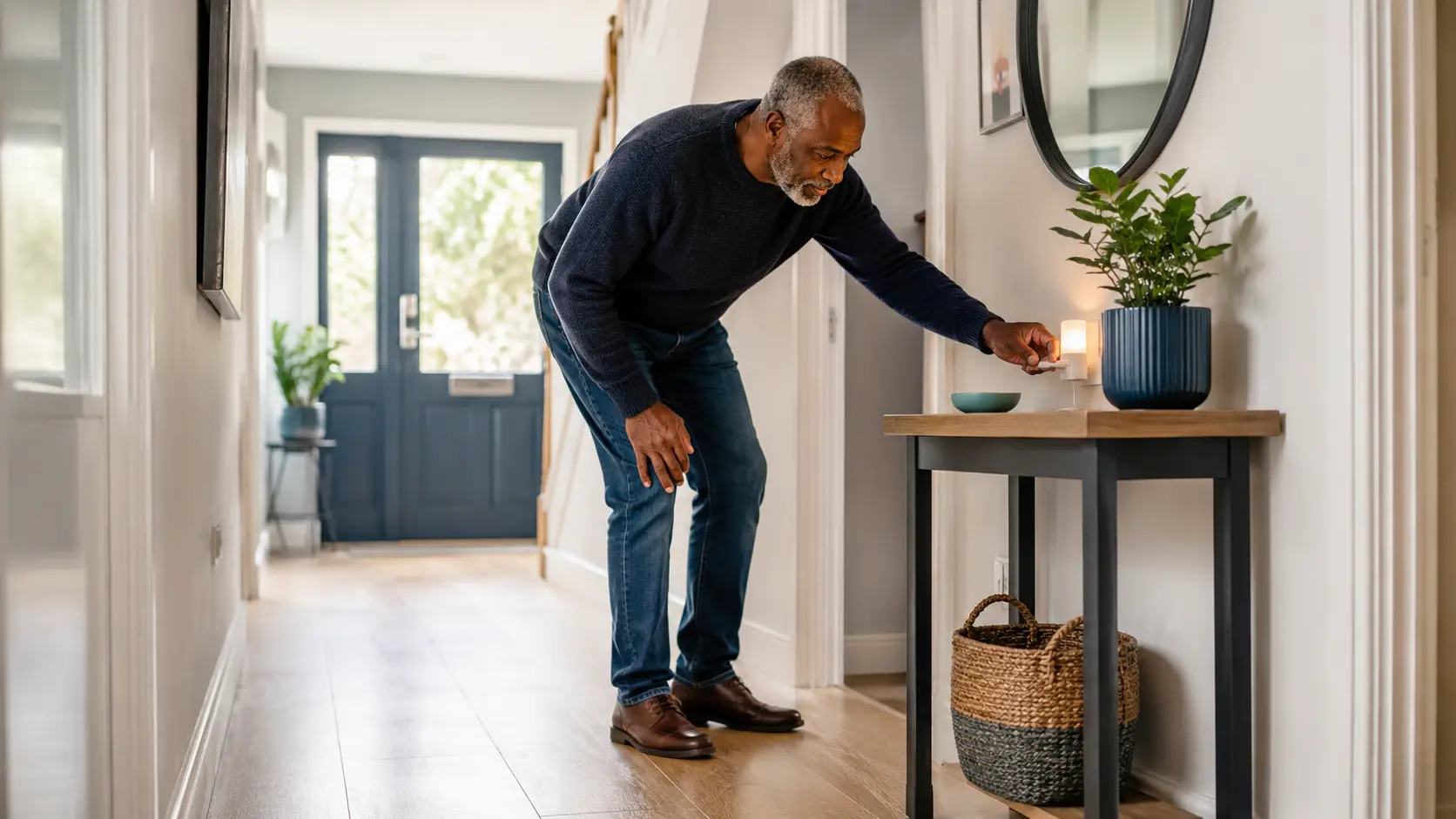
Night lights or motion-activated lights can be helpful between the bedroom and bathroom. A bedside lamp should be reachable without stretching or getting out of bed in darkness.
Allow your eyes time to adjust when moving from a bright room into a darker one. If you wear glasses, keep them somewhere consistent and easy to reach.
Make stairs easier to use
Stairs deserve particular attention because a small loss of balance can have serious consequences.
Secure handrails should ideally provide dependable support throughout the staircase. If the existing rail is loose, too short or difficult to grip, have it repaired or replaced. A second handrail may help some people, depending on the width and design of the stairs.
Also check that:
- Every step is in good condition.
- Carpet is firmly attached.
- Nothing is stored on the staircase.
- The top and bottom are well lit.
- Patterns do not make the edges difficult to distinguish.
- You can operate the lights before stepping onto the stairs.
Contrasting strips on the front edge of each step may help when depth or contrast is difficult to judge, but they must be securely attached and appropriate for the surface.
Do not carry a load that prevents you from seeing the steps or using the handrail. Make two journeys or ask for help instead.
Reduce bathroom hazards
Bathrooms combine hard surfaces, water and limited space, making them an important part of any home-safety review.
Use a properly fitted non-slip surface in the bath or shower. A loose towel or ordinary mat placed inside the bath is not a safe alternative.
Grab rails can provide support when entering or leaving the bath or shower and when using the toilet. They must be:
- Designed for the purpose
- Positioned for the individual who will use them
- Suitable for the wall construction
- Installed securely
Towel rails, soap dishes and radiator pipes are not designed to support body weight.
A shower seat may help someone who feels unsteady or becomes tired while standing, but it should be stable, suitable for the space and used with appropriate professional advice when necessary.
Keep soap, shampoo and towels within easy reach so you do not have to twist, bend deeply or stretch across a wet surface.
Arrange the kitchen around comfortable reach
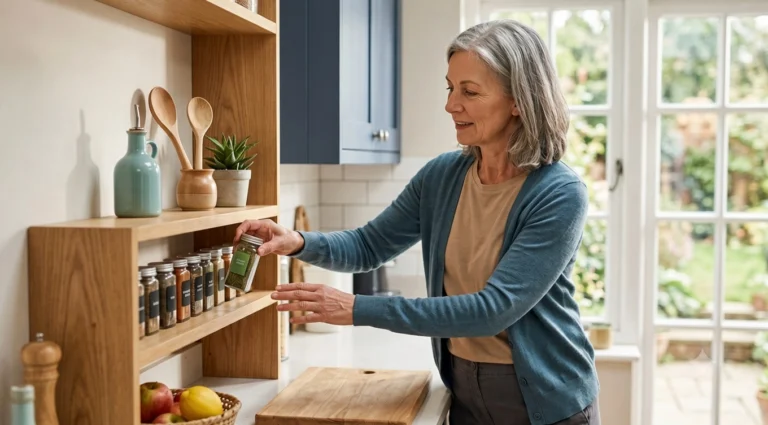
Everyday items should be stored where you can reach them without climbing, crouching deeply or stretching overhead.
Place frequently used cookware, food and crockery between approximately waist and shoulder height. Reserve very high or low cupboards for lighter items that are rarely needed.
Avoid standing on chairs, boxes or worktops. If you cannot reach something safely, ask for help or rearrange the cupboard.
Clean up water, oil and dropped food promptly. Keep a cloth or mop somewhere easy to access so a small spill does not remain on the floor while you search for cleaning equipment.
Use stable chairs with supportive backs and arms if you prefer to sit while preparing food. Wheeled chairs and lightweight folding stools may move unexpectedly and are generally unsuitable for support.
Make the bedroom safer at night
Falls can occur when someone wakes suddenly and moves before they are fully alert.
Keep the route from the bed to the door clear, with slippers, cables and bedding away from the floor. Place a lamp, glasses and telephone within comfortable reach.
If you regularly get up during the night:
- Use a night light or motion-activated light.
- Sit on the edge of the bed briefly before standing.
- Avoid walking in socks alone.
- Keep the bathroom route unobstructed.
- Consider whether the bed height makes standing difficult.
- Ask for advice if dizziness occurs when you rise.
A bed that is extremely low may make standing harder, while one that is too high can make it difficult to place both feet securely on the floor. An occupational therapist or other appropriate professional can advise if bed height or transfers are becoming difficult.
Choose supportive indoor footwear
Bare feet, socks and loose-backed slippers may provide less grip or stability than properly fitting footwear.
Indoor shoes or slippers should ideally:
- Fit securely around the heel
- Have a broad, stable base
- Provide good grip
- Fasten firmly without restricting circulation
- Be free from worn or damaged soles
Avoid footwear that slips off, catches on flooring or changes the way you normally walk.
Foot pain, numbness, swelling and overgrown or difficult toenails can also affect balance. Seek advice from an appropriate healthcare or foot-care professional rather than adapting the way you walk around the problem.
Keep essential items within reach
Frequently used objects should be easy to access without bending awkwardly or climbing.
Think about where you keep:
- Medicines
- Telephone chargers
- Remote controls
- Cooking equipment
- Cleaning products
- Towels and bedding
- Pet food
- Outdoor clothing
- Gardening tools
A cordless telephone, mobile phone or personal alarm can provide reassurance, but it is useful only if it remains close enough to reach. Get into the habit of carrying it rather than leaving it in another room.
Do not use furniture as a walking aid
Chairs, tables and radiators may move, tip or fail to support your weight. If you regularly hold onto furniture while walking, speak to a healthcare professional about your balance and whether a properly selected walking aid might help.
Do not begin using somebody else’s walking stick or frame without checking that it is appropriate and adjusted correctly. An unsuitable aid can change your posture and may introduce new risks.
If you already use an aid, keep it close enough to reach before standing. Check rubber tips, wheels and brakes regularly for wear or damage.
Remember entrances and outdoor areas
Fall prevention does not stop at the front door.
Check paths, steps and garden areas for:
- Loose paving
- Moss, leaves or algae
- Poor drainage
- Uneven gravel
- Damaged handrails
- Overgrown plants
- Garden hoses
- Tools left on the ground
- Inadequate lighting
Arrange repairs rather than relying on memory to avoid a broken or uneven area.
Take extra care in frost, rain or wet leaves. Use another entrance or ask for assistance when conditions make the usual route unsafe.
Make changes before a crisis
It is easier to improve a home while you can consider the options calmly. You do not need to wait until someone has fallen.
Useful signs that a safety review may be worthwhile include:
- Holding walls or furniture while walking
- Hesitating at steps or thresholds
- Avoiding particular rooms
- Finding it difficult to enter the bath or shower
- Struggling to rise from the toilet, bed or a chair
- Feeling dizzy when standing
- Having a near miss
- Becoming worried about falling
A healthcare professional, occupational therapist or local falls-prevention service may be able to assess both personal risk factors and the home environment. Depending on where you live, local health, social-care, ageing or community organisations may provide assessments or help with adaptations.
Home changes are only part of prevention
A safer home can reduce hazards, but falls often have more than one cause.
Balance, muscle strength, eyesight, hearing, foot problems, hydration, medical conditions and medicines can all affect risk. Regular strength and balance activity may help, provided it is appropriate for your health and ability.
Speak to a doctor, pharmacist or other appropriate professional if:
- You have fallen, even if you were not seriously injured.
- You feel increasingly unsteady.
- You experience dizziness, faintness or blackouts.
- A medicine seems to make you sleepy or light-headed.
- Your vision has changed.
- Fear of falling is limiting your normal activities.
- You have started relying on furniture for support.
Do not stop taking prescribed medicine without professional advice.
Plan what you would do after a fall
Even with sensible precautions, it is useful to have a plan.
Carry a phone or wear a personal alarm if you may be unable to reach a telephone after falling. Consider arranging regular contact with a relative, neighbour or friend if you live alone.
If you fall and may be injured, do not rush to stand. Call for help and keep warm while waiting. Seek urgent medical attention following a serious injury, loss of consciousness, severe pain or inability to move.
If you are uninjured and have been taught a safe way to get up, move slowly and use stable support. Otherwise, wait for assistance rather than risking another fall.
A fall or near miss should prompt a review of what happened. The cause may be an environmental hazard, but it may also reveal a health, medication, eyesight or balance issue that deserves attention.
Preserve confidence as well as safety
Fear of falling can lead people to move less. Unfortunately, reduced activity may gradually weaken the muscles and balance needed for confident movement.
The goal of fall prevention is not to discourage ordinary activity or remove every element of personality from your home. It is to remove avoidable hazards while making everyday movement easier and more secure.
Concentrate on improvements that support independence: clear routes, good lighting, sensible storage and reliable handholds where they are genuinely needed.
Key Takeaways
- Falls are not an inevitable part of getting older, and many home hazards can be reduced.
- Prioritise the routes you use most frequently and inspect them in daylight and darkness.
- Remove clutter, secure flooring and keep cables away from walking areas.
- Improve lighting around stairs, entrances and the route between the bedroom and bathroom.
- Fit purpose-made handrails and grab rails securely rather than relying on furniture or towel rails.
- Seek professional advice if you have fallen, feel unsteady or are unsure which adaptations are suitable.
👣
One Small Step
Walk from your bed to your bathroom today and remove one object, cable or loose mat that could become a trip hazard at night.
Sources & Further Reading
A Note About Your Health
The information provided in this article is intended for educational and informational purposes only and should not be considered medical advice. It is not a substitute for professional diagnosis, treatment or advice from a qualified healthcare provider.
Always consult your doctor or another appropriately qualified health professional before making significant changes to your diet, exercise routine, medication, supplements or lifestyle, particularly if you have an existing medical condition or take prescription medication.