A long journey can be the least enjoyable part of a holiday, family visit or special event. Hours spent sitting in one position may leave you stiff and tired, while crowded stations, airport queues and heavy luggage can make the experience more demanding than the destination itself.
You do not have to consider yourself old or frail to benefit from planning ahead. Changes in joint mobility, sleep, circulation, eyesight or energy can become more noticeable during a lengthy journey, even when they cause few problems in everyday life.
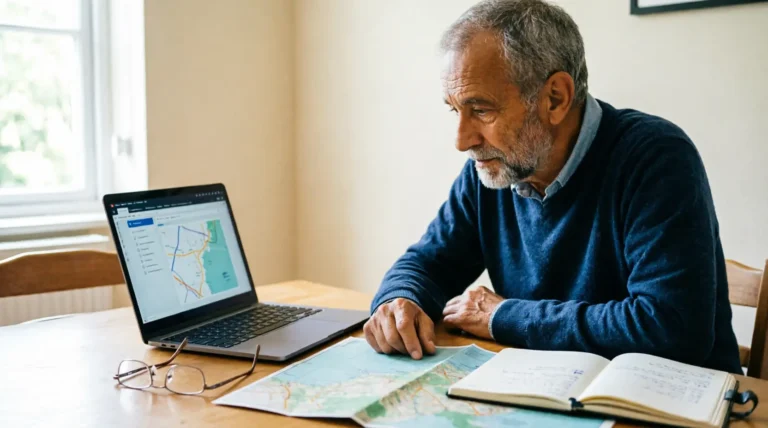
A comfortable trip begins before you leave home. Choosing a suitable route, reserving the right seat and allowing more time can make a greater difference than trying to endure every inconvenience once the journey has begun.
Two Minute Read
- Choose a route and departure time that reduce unnecessary rushing, waiting and changes.
- Reserve a suitable seat and request assistance in advance if it would make travelling easier.
- Keep medicines, documents, glasses and essential supplies where you can reach them.
- Change position regularly and move your legs during long periods of sitting.
- Drink enough fluid, but consider when toilets will be accessible.
- Wear loose clothing and comfortable, supportive footwear.
- Break up long car journeys and share the driving when possible.
- Seek medical advice before travelling if you have recently been unwell, had surgery or may have an increased risk of blood clots.
Plan for comfort rather than speed alone
The fastest journey on paper is not always the most comfortable. A cheaper flight at an inconvenient hour, a rail route with several tight connections or a long drive without a sensible stopping point may require more energy than expected.
When comparing your options, consider:
- The time you will need to leave home
- How far you must walk at stations or airports
- The number and length of connections
- Whether lifts and accessible toilets are available
- How long you may need to stand or queue
- The likelihood of travelling during busy periods
- How you will reach your accommodation at the other end
- Whether an overnight stop would improve the journey
A direct route may be worth paying slightly more for if it avoids a stressful connection or several changes with luggage.
Build some breathing space into the schedule. Enough time to find the correct platform, visit the toilet or sit down for a few minutes can turn a difficult transfer into a manageable one.
Choose your travel time carefully
Your natural routine can help determine when you travel best. If you have more energy in the morning, an early but not excessively early departure may suit you. If stiffness is worse after waking, leaving later might allow time to move around and eat properly first.
Try not to begin a journey already tired. A very early flight can effectively start the previous night, particularly when check-in and travel to the airport are included.
Busy roads, stations and airports can add noise, queues and prolonged standing. Travelling outside the busiest periods may offer a calmer experience and sometimes a lower price.
Consider your arrival time too. Reaching an unfamiliar destination late at night may involve finding transport, collecting keys or navigating poorly lit surroundings when you are already tired.
Reserve a seat that suits you
Seat selection is not merely about obtaining extra legroom. Think about how often you may want to move, whether you need easy toilet access and which position feels most comfortable.
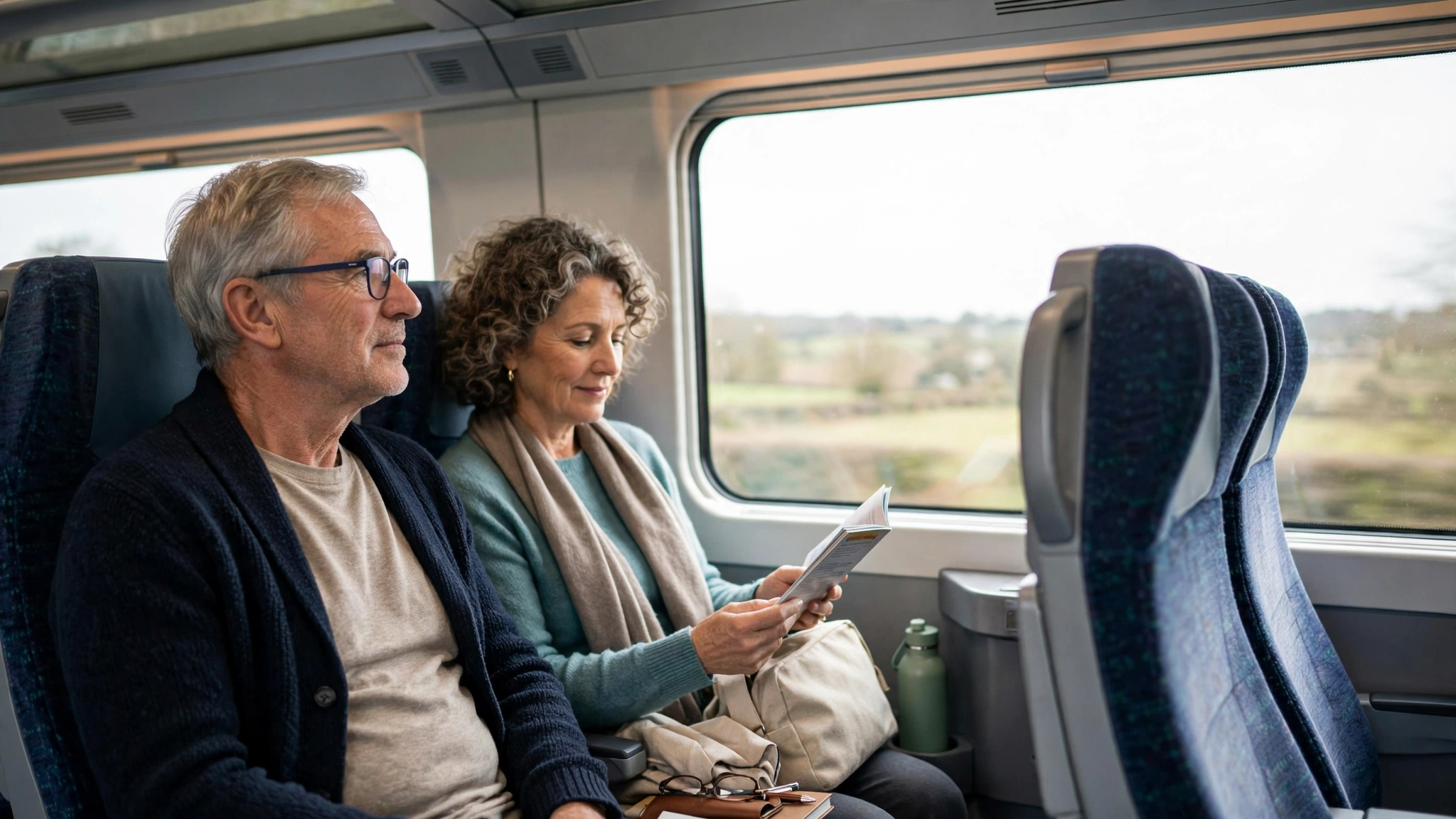
On a train, you might prefer:
- A forward-facing seat
- A table for food, medication or a device
- A place near the toilet
- A seat close to the carriage doors
- Space suitable for a mobility aid
- A quiet carriage
On a flight, an aisle seat can make it easier to stand and move without disturbing another passenger. A window seat may be preferable if you intend to sleep and do not expect to get up often.
Seats next to emergency exits usually have specific eligibility requirements. Do not choose one solely for the additional space if limited mobility or another condition might prevent you from assisting during an emergency.
When travelling by coach, sitting closer to the front may reduce the sensation of movement and shorten the walk to the exit. Confirm whether the vehicle has a toilet and whether it will remain available throughout the journey.
Use assistance when it would help
Travel assistance is not reserved for wheelchair users. It may be valuable if you cannot comfortably walk long distances, stand for extended periods, carry luggage through a station or manage stairs.
At UK airports, qualifying disabled passengers and people with reduced mobility can request assistance free of charge. Support may include help through the airport, boarding the aircraft and collecting baggage.
Book assistance as early as the operator recommends and explain what you need clearly. Assistance providers cannot know from a general request whether you can climb steps, walk a short distance or transfer independently.
Airline staff are not normally expected to help passengers eat, take medication or use the toilet. If you need personal care during the journey, ask the airline what support is available and whether you will need to travel with someone who can assist you.
Rail operators may also offer help with navigating the station, boarding, leaving the train and handling luggage. Arrangements and notice periods differ, so check directly with the relevant service.
Keep essential items close
Anything you may need during the journey should remain accessible rather than buried at the bottom of a suitcase.
Your small travel bag might contain:
- Tickets and identification
- Medicines
- Prescription information
- Glasses or hearing-aid supplies
- Telephone and charging cable
- Water
- A light snack
- Tissues and hand sanitiser
- An extra layer of clothing
- Any necessary medical information
- Details of your accommodation and onward transport
Keep the bag light enough to handle comfortably. Multiple small compartments can help you retrieve an item without unpacking everything.
Place heavier luggage on wheels when possible, but check that you can control it on slopes, kerbs and escalators. A four-wheeled case may be easy to move on a level surface but can roll away unexpectedly on an incline.
Ask for help rather than lifting a heavy bag into an overhead rack. Twisting while lifting above shoulder height can strain the back or shoulders and affect your balance.
Organise medicines before leaving
Take enough prescribed medicine for the entire trip, with some additional supply when appropriate in case of delays. Keep essential medicines with you rather than placing all of them in checked baggage.
Original labelled packaging can make medicines easier to identify and may help when passing through security or seeking medical care. Carry a copy of your prescription or medication list, ideally using generic as well as brand names.
Rules governing controlled drugs and other medicines differ between countries. Before travelling internationally, check the requirements of your destination and any country through which you will pass.
Liquid medicines needed during a flight may be exempt from normal cabin baggage limits, but supporting documentation can be required. Confirm the current rules with the airport and airline rather than assuming that ordinary restrictions apply.
Medicines that need refrigeration, injection equipment, oxygen, continuous positive airway pressure equipment or other medical supplies require additional planning. Contact the transport provider before booking or well before departure.
Never alter your dose or schedule simply to fit a journey without first obtaining advice from a doctor or pharmacist. Crossing time zones may affect when some medicines should be taken.
Wear comfortable clothing and footwear
Choose loose layers that allow you to adjust to changing temperatures. A warm platform, air-conditioned carriage and cool aircraft cabin may all occur during the same journey.
Clothing should not restrict your waist, legs or ankles when sitting. Natural swelling can make tight shoes or waistbands increasingly uncomfortable after several hours.
Wear footwear that:
- Fits securely
- Provides adequate room
- Has a stable, non-slip sole
- Can accommodate minor swelling
- Is easy to remove only if necessary
- Will be comfortable during unexpected walking
Avoid beginning a long journey in completely new shoes. Even a short walk through a large airport can reveal pressure points that were not apparent in the shop.
A lightweight scarf, cardigan or packable jacket can provide warmth without taking up much space.
Change position and move regularly
Sitting still for a long time can contribute to stiffness, back discomfort and swelling. On journeys lasting several hours, movement also supports circulation.
When it is safe and permitted:
- Stand and walk at suitable intervals.
- Flex and point your feet.
- Circle your ankles.
- Raise and lower your heels.
- Gently tighten and release your calf muscles.
- Change your sitting position.
- Avoid keeping your legs crossed for long periods.
You do not need to perform conspicuous exercises. Small movements repeated regularly can be more useful than waiting until you feel extremely stiff.
Movement advice applies to long journeys by car, coach and train as well as air. If you are driving, stop somewhere safe before stretching or walking. Passengers should not perform movements that could interfere with the driver.
Do not walk around a moving aircraft when the seatbelt sign is illuminated. Turbulence can occur unexpectedly, so keep your seatbelt fastened loosely whenever you are seated.
Understand blood-clot risk without becoming alarmed
Long periods of restricted movement can increase the risk of deep vein thrombosis, or DVT. This is a blood clot that usually develops in a deep vein in the leg. Part of a clot can occasionally travel to the lungs and cause a pulmonary embolism.
The overall risk for most travellers is small, but it can be higher when a long journey is combined with factors such as:
- A previous blood clot
- Recent surgery, injury or hospital treatment
- Active cancer or cancer treatment
- A blood-clotting disorder
- Limited mobility
- Pregnancy or recent childbirth
- Hormone replacement therapy or oestrogen-containing medication
- Certain long-term health conditions
Age can be one contributing factor, but turning 50 does not in itself make long-distance travel unsafe.
If you believe you may be at increased risk, ask a healthcare professional for individual advice before travelling. Properly fitted compression stockings may be recommended for some people but are not suitable for everyone.
Do not take aspirin or another blood-thinning medicine solely for travel unless a healthcare professional has specifically advised you to do so.
Seek urgent medical help if you develop unexplained swelling, pain, warmth or redness in one leg. Sudden difficulty breathing, chest pain, coughing up blood, a very fast heartbeat or collapse may indicate a pulmonary embolism and requires emergency attention.
Drink sensibly during the journey
Take regular drinks rather than waiting until you feel very thirsty. Water is a straightforward choice, but your needs will vary according to the temperature, journey and your health.
Do not deliberately become dehydrated to avoid using the toilet. Instead, plan around the facilities available and choose an accessible seat when frequent toilet visits are likely.
Some health conditions require fluid restrictions. Continue to follow the advice you have been given rather than applying general travel guidance.
Large amounts of alcohol can disturb sleep, affect balance and judgement, interact with medicines and make it harder to respond to an unexpected change in the journey.
Caffeine can be useful when you need to remain alert, especially while driving, but too much may contribute to restlessness, indigestion or disrupted sleep after arrival.
Eat for steady energy
Long journeys often disrupt normal mealtimes. Relying entirely on whatever happens to be available can result in a heavy meal, long gap without food or snack that does not suit your needs.
If practical, carry something simple such as fruit, a sandwich, oatcakes or unsalted nuts. Choose food that travels safely and complies with any rules at your destination.
People with diabetes or another condition affected by meal timing should plan more carefully for delays. Keep suitable food, medication and monitoring supplies accessible.
Very rich or spicy food may aggravate indigestion when followed by several hours of sitting. A modest meal may be more comfortable immediately before or during the journey.
Make car journeys easier
A long drive offers flexibility, but it can be physically and mentally tiring.
Before leaving:
- Adjust the seat, head restraint and mirrors.
- Check that you can operate the pedals without stretching.
- Position lumbar support if you normally use it.
- Plan suitable rest stops.
- Check traffic and weather conditions.
- Store essential items where a passenger can reach them safely.
- Avoid loose objects that could move around the vehicle.
Stop regularly somewhere safe to walk, stretch and use the toilet. Do not wait until discomfort or tiredness becomes severe.
Share the driving if possible. If you feel sleepy, stop safely—fresh air, loud music or an open window are not reliable ways to overcome fatigue. A short nap and appropriate caffeine may help temporarily, but continuing to drive while sleepy is dangerous.
Avoid setting a demanding arrival deadline. Roadworks, congestion and weather can turn an already long drive into an exhausting one.
Prepare for rail travel
Train travel allows more freedom to move, but stations and connections can present challenges.
Reserve a seat when the service permits and check whether your ticket restricts you to a particular train. A flexible ticket may reduce stress if delays elsewhere affect the journey.
Before departure, confirm:
- Which station and entrance you need
- Whether lifts are operating
- How much time is available for connections
- Where assistance points are located
- Whether food and toilets will be available
- How you will manage luggage
- Whether engineering work affects the route
Platform alterations can require passengers to move quickly. Station assistance may be helpful if walking distance, stairs or luggage could make a sudden change difficult.
Keep your ticket and railcard readily available. If using a telephone, ensure it has sufficient charge and consider carrying a paper record of important booking details.
Prepare for air travel
Flying often includes considerably more sitting, walking and waiting than the flight time suggests.
Check in online if doing so makes the airport easier, but keep any documents needed at bag drop, security or passport control accessible.
Allow enough time to move through the airport without rushing. Wear clothing and footwear that are comfortable for walking and easy to manage at security.
Before flying, confirm:
- Cabin and checked-baggage allowances
- Rules for medicines and medical equipment
- Whether assistance has been booked
- Your seat allocation
- How you will travel from the arrival airport
- Any entry, health or insurance requirements
- Whether a recent medical condition requires clearance to fly
Cabin air and prolonged sitting may feel drying or uncomfortable. Drink sensibly, move when safe and use any regular moisturising eye drops or other permitted treatments as directed.
Ear pressure during take-off and landing may be eased by swallowing, yawning or chewing. Seek medical advice before flying if you have a significant ear infection or have recently undergone relevant surgery.
Consider motion sickness
Motion sickness can occur in a car, coach, ship or aircraft. Looking at a stable distant point, facing the direction of travel and avoiding prolonged reading may help some people.
Fresh air and a seat where movement is less pronounced can also make a difference. On a coach, this may mean sitting closer to the front; on a ship, a central cabin on a lower deck may experience less motion.
Medicines for motion sickness can cause drowsiness, blurred vision or other side effects and may interact with existing treatments. Ask a pharmacist or doctor what is appropriate, particularly if you will be driving or take other medicines.
Reduce strain during connections
Changing trains or flights can be one of the hardest parts of a journey. You may need to find a different terminal, pass through security again or cover a considerable distance.
Choose connections with realistic transfer times. The minimum permitted connection may assume that everything runs smoothly and may leave little opportunity to rest or use the toilet.
Check whether luggage will be transferred automatically. If you must collect and recheck it, allow additional time and make sure you can manage the process.
Keep information about the next stage of the journey together. Screenshots or printed details can be useful when internet access is unreliable.
If a delay threatens your connection, speak to staff early. Waiting until the final few minutes may reduce the alternatives available.
Protect your sleep and manage time differences
A long journey can disrupt sleep even without crossing time zones. Noise, an early start and an unfamiliar bed may all contribute.
In the days before travelling, try to avoid accumulating a large sleep deficit. Pack early enough that preparation does not continue late into the night.
For a substantial time-zone change, gradually shifting your routine before departure may help, although this is not always practical. Once you arrive, daylight, local mealtimes and gentle activity can help your body adjust.
Try not to fill the first day with demanding commitments. A quiet arrival period gives you time to unpack, eat and recover.
Sleeping tablets are not a harmless shortcut for every traveller. They can cause lingering drowsiness, confusion or reduced mobility. Discuss their use with a healthcare professional rather than trying an unfamiliar product during the journey.
Build recovery time into the trip
Comfort is not only about what happens while you are in your seat. A tightly packed schedule immediately after arrival can make ordinary travel fatigue feel much worse.
If possible:
- Avoid driving a long distance immediately after a flight.
- Arrange straightforward transport to your accommodation.
- Keep the first meal simple.
- Allow time to unpack essential items.
- Take gentle movement rather than remaining seated all evening.
- Give yourself a quieter first day after a demanding journey.
A short rest may help, but a long daytime sleep can make it harder to settle at night. Listen to your body while gradually adapting to the local routine.
When to seek advice before travelling
Speak to an appropriate healthcare professional before a long journey if you:
- Have recently had surgery or been admitted to hospital
- Have recently experienced a blood clot
- Have significant heart or lung disease
- Need oxygen or medical equipment while travelling
- Have a condition that is unstable or has recently worsened
- Are recovering from a serious infection or injury
- Have difficulty sitting upright for the expected duration
- Are uncertain how to manage medication across time zones
- Have been advised to avoid flying or prolonged travel
- Are concerned about your individual blood-clot risk
Contact the airline or other operator separately about practical arrangements. Medical advice and transport assistance address different parts of the journey.
Appropriate travel insurance is important, particularly when travelling abroad. Declare relevant medical conditions accurately and check what the policy covers before booking.
Keep the journey in perspective
Needing extra time, a better seat or some assistance does not mean that travel is no longer for you. It means you are arranging the journey around your actual needs instead of expecting yourself to tolerate unnecessary discomfort.
Start with the factors you can control: your route, schedule, seat, luggage and supplies. Plan opportunities to move and rest, then leave enough flexibility for the unexpected.
A well-designed journey preserves more of your energy for the people, places and experiences awaiting you at the other end.
Key Takeaways
- The fastest or cheapest route is not always the most comfortable.
- Reserve a suitable seat and request assistance when walking, standing or managing luggage may be difficult.
- Keep medicines and other essentials accessible throughout the journey.
- Change position, move your legs and walk when it is safe to do so.
- Long-distance travel has a small blood-clot risk for most people, but individual risk factors may require professional advice.
- Break up car journeys and never continue driving when sleepy.
- Allow time to recover after arrival instead of beginning with an exhausting schedule.
👣
One Small Step
Before booking your next long journey, identify the one part most likely to cause discomfort—such as the seat, connection or luggage—and improve that first.
Sources & Further Reading
A Note About Your Health
The information provided in this article is intended for educational and informational purposes only and should not be considered medical advice. It is not a substitute for professional diagnosis, treatment or advice from a qualified healthcare provider.
Always consult your doctor or another appropriately qualified health professional before making significant changes to your diet, exercise routine, medication, supplements or lifestyle, particularly if you have an existing medical condition or take prescription medication.